

We Have a Well!
Now What?

Well Installation
The Grove was purchased as a 20-acre agricultural lot of “raw land” - there’s no electricity, sewer, water, or gas hook ups to county utilities. We’ve been making do with hauling water from home and using solar or a generator for our power needs.
For a successful yield, elderberry shrubs need 1-2” of water per week, so irrigation will be critical during the summer. I researched local well diggers, and settled on one with consistently high online reviews. He came out for a site visit and made some good points about our terrain.
Ben & I originally had planned to drill in the highest elevation area so gravity could do it’s thing, but decided to go with our driller’s advice to dig in the lower field. The soil is more sandy in the lowlands, and water should be closer to the surface. This location is going to be handy, as it’s nearby the elderberry plots.
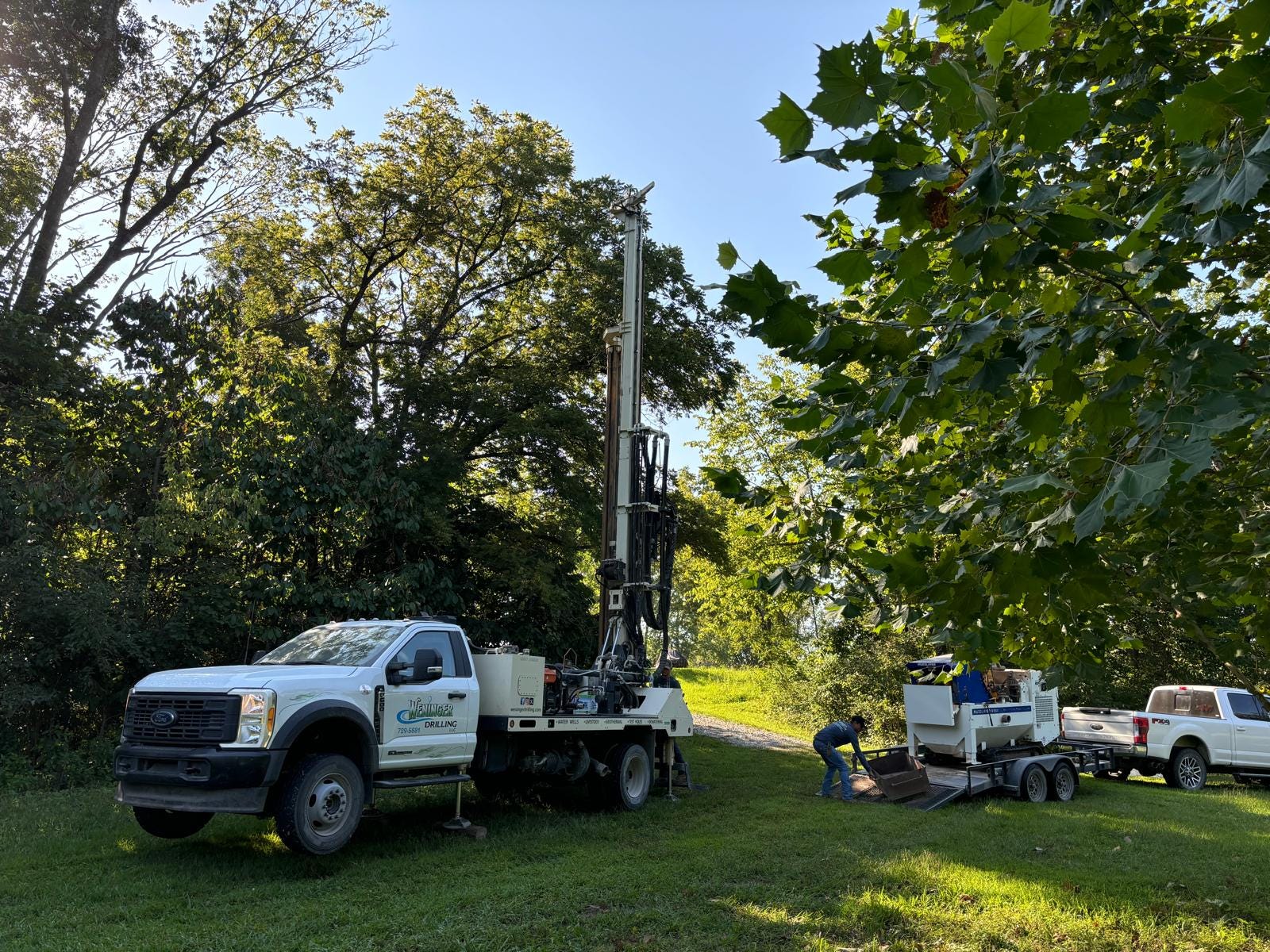
The crew had some awesome specialty equipment. One machine was called the mudslayer (pictured above on the trailer) - as the well was drilled, the mud was pumped into this machine, which minimized mess on the ground.
The crew first hit water at 90’, but continued drilling down to 110’ - not bad for this area. The drilling machine inserts a casing pipe into the borehole, maneuvers the next into place, screws the two casings together, repeat.
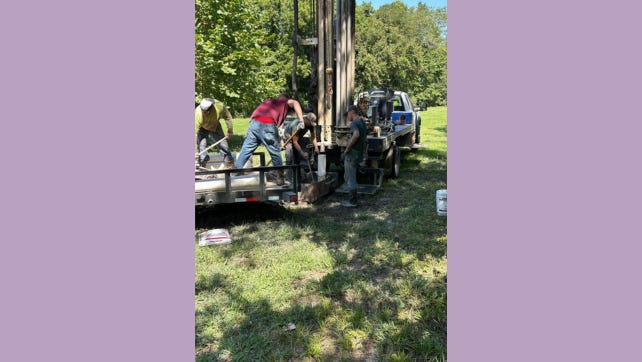
After the casings are all in place, the hole is filled with gravel. Bentonite clay is then added to surround the well casing. This special clay hardens when it comes into contact with water, serving as a seal for the well.
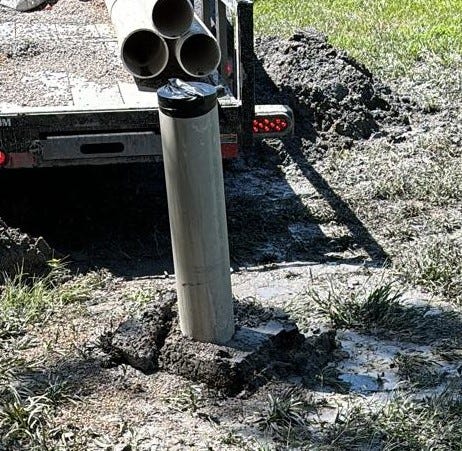
Next, the well is flushed out by shooting compressed air down the casing to remove debris, cuttings & sediment from the borehole.

Now What?
Ok…so the well is drilled, they hit water, and the crew packed up and left. The guy was supposed to come back and measure our gallons per minute. Months later, and that didn’t happen.
Ben spec’d out a well pump with solar power and we went ahead with the purchase. Right now all the equipment is sitting in our garage as we wait for a span of nice weather. We’ll build a small well house to serve as protection for the equipment. Once the pump is in place, we’ll calculate the flow rate and get some water tests.
We need flow rate & water tests before designing irrigation for the elderberry shrubs - which needs to be in place by June/July for best health of the plants. If all that isn’t figured out and installed in time, I’ll have a rough time keeping up with watering the elderberry manually.
I’ll post again this spring updating how the wellhouse & pump are coming along, and share details as we design the irrigation system.

