

Pollinator Field Planting
Harrow & Broadcast

I completed planting our 1.7 acre pollinator field in March, and am so relieved to have that finished! To have a successful native wildflower field, you can’t just throw seed out and hope it will grow. There is a significant amount of preparation involved - check out my previous post to read about the project and what we did to prepare for the planting:

As I looked ahead at the 90-day forecast, it became apparent that weather would not cooperate for a second attempt at a prescribed burn. The burn plan specified it needed to happen between the dates of November 15 and March 15 (this was the best time to kill problem weeds in the seed bed with heat). Under our EQIP contract we needed to spread native wildflower seeds before March 15. This timeframe is just too wet for a successful prescribed burn (which would also get rid of all the accumulated thatch), so I explored our options.
I could drill the seeds into the ground using special equipment. This is the best option all around, as the seeds are guaranteed direct contact with the soil and can be placed at a precise depth.
We could borrow a specialty seed drill from a nearby USDA office if our tractor were powerful enough. Sadly, it is not - more on equipment frustrations in a future post. :)
We could pay someone to come out and drill the seeds for us. I’m a frugal person by nature (Ben would say cheap, but it’s all a matter of perspective), and really didn’t want to pay for that service.
I could till the ground, then roll over it with a cultipacker to slightly compress the soil. Soil that is too fluffy won’t work well for native wildflower seeds.
It’s too wet to till the soil. Working muddy ground isn’t good - it will destroy soil structure, increase compaction, and I imagine would be a clumpy mess clogging up the tiller.
We don’t own a cultipacker. See previous excuses about being frugal/cheap.
I could drag a harrow over the soil. It acts kind of like a rake, scratching through thatch and increasing the chances seed could come in contact with bare ground.

With the clock counting down on our EQIP contract, I decided to harrow & plant on 02.27.25. We already own a small harrow, so might as well get some use out of it! For those who are on a budget, I’ve heard about dragging a cedar tree to use as a harrow. And potentially more exciting: A lady from Master Gardeners told me about how they’d dragged an old bed spring with straw bales on top, then she’d ride on the bales to add a little weight. I’d kind of like to see that! :D
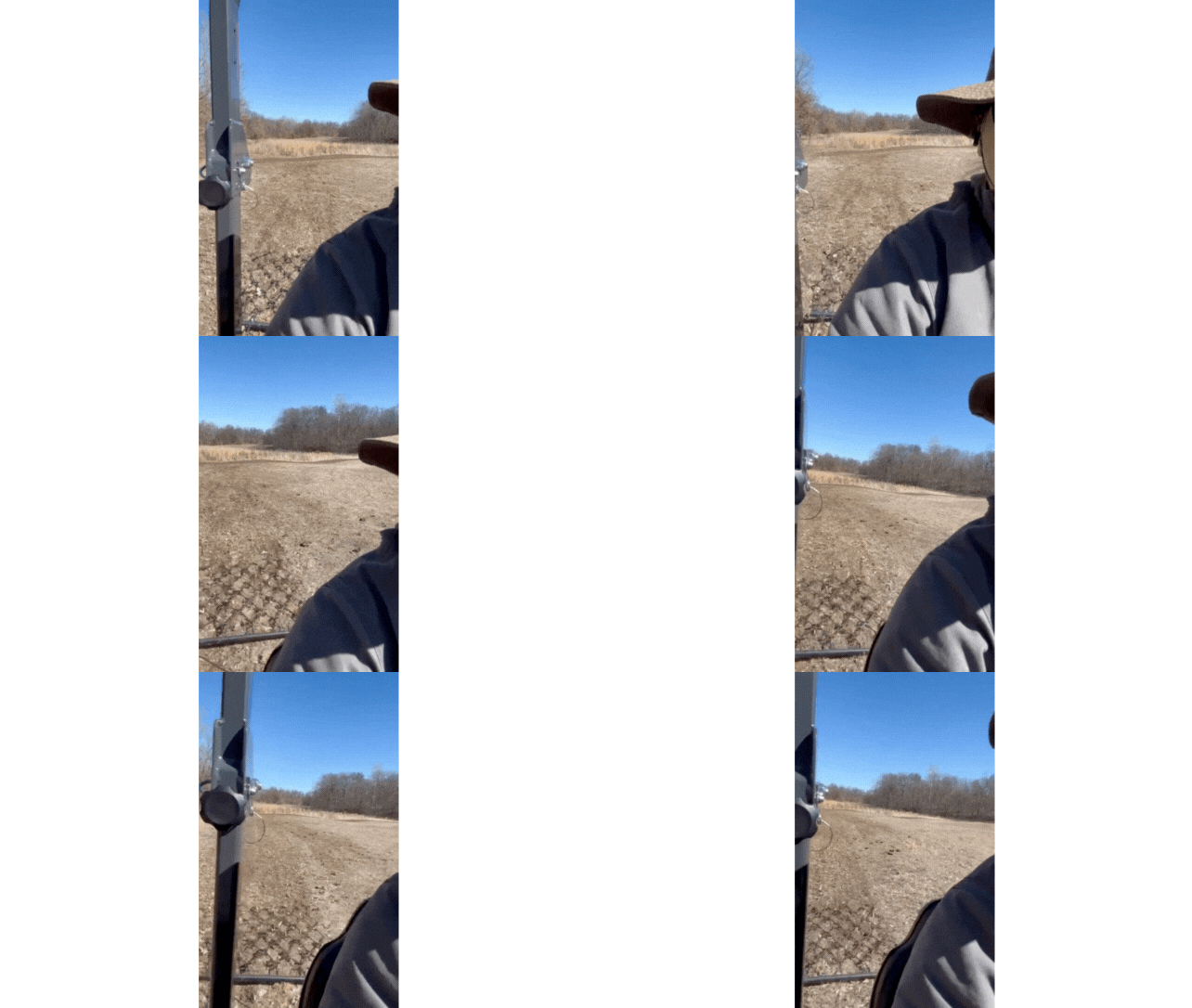
From past experience, I knew to reign in my enthusiasm and drive somewhat slow - this keeps the harrow from getting bound up on itself or coming unhooked.

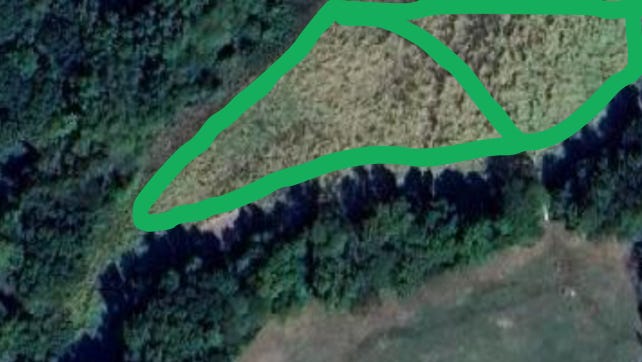
I marked a 2 ft wide walking path diagonally through the field, as well as a wider path around the perimeter for UTV access - this way we can still use the area without trampling flowers. I spread white clover seed in the green-marked areas.

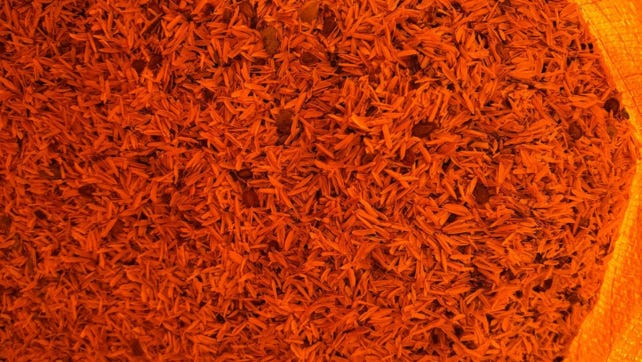
Native seeds are very lightweight, so it’s important to mix them with another item (sand/sawdust/vermiculite/cracked corn/etc.) to help distribute evenly when using a broadcast spreader. Generally, use a 1:1 or 2:1 ratio of carrier material to seeds. Our seeds came pre-mixed with rice hulls. The image below looks orange because of sunlight shining through the bag.
Our tractor-mount broadcast spreader bit it after only a few months, so sadly I’d need to do this planting on foot. I divided the field roughly into 5 sections and marked them with orange poles so I could visualize it in smaller, more attainable pieces. I used a crank spreader that holds seed in a bag strapped over the shoulder. A regular push spreader that you’d use on a lawn will not work in this case because of uneven ground.
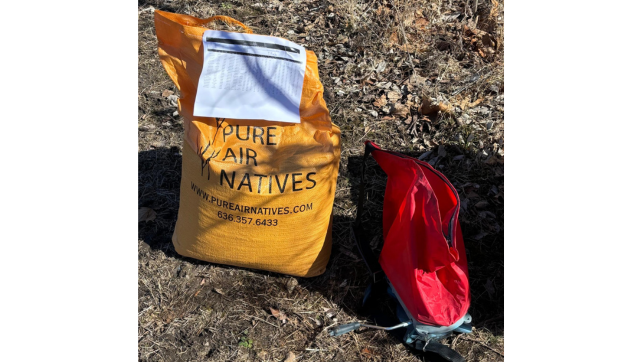
I poured roughly 20% of the overall seed amount into the seeder bag for each section, then walked a crosshatch pattern in that area trying to spread the seed evenly. I was trying to be extra careful not to run out of seed, so started out on the spreader’s smaller distribution settings. Turns out it needed to be wide-open (a 6-setting on this model of spreader) for the seed/rice hull mixture. I walked the fields much more than was strictly necessary, and if I had to do it again would just put it on the wide-open setting. Harrowing, marking the field into smaller sections, & broadcasting on foot all took about 4 hours.

Now we’ll wait up to 3 years for spectacular blooms. I’ve been warned that native wildflowers follow the typical gardener’s saying: sleep the first year, creep the second, then leap the third year. I look forward to posting pictures of our flowers in the seasons to come!

